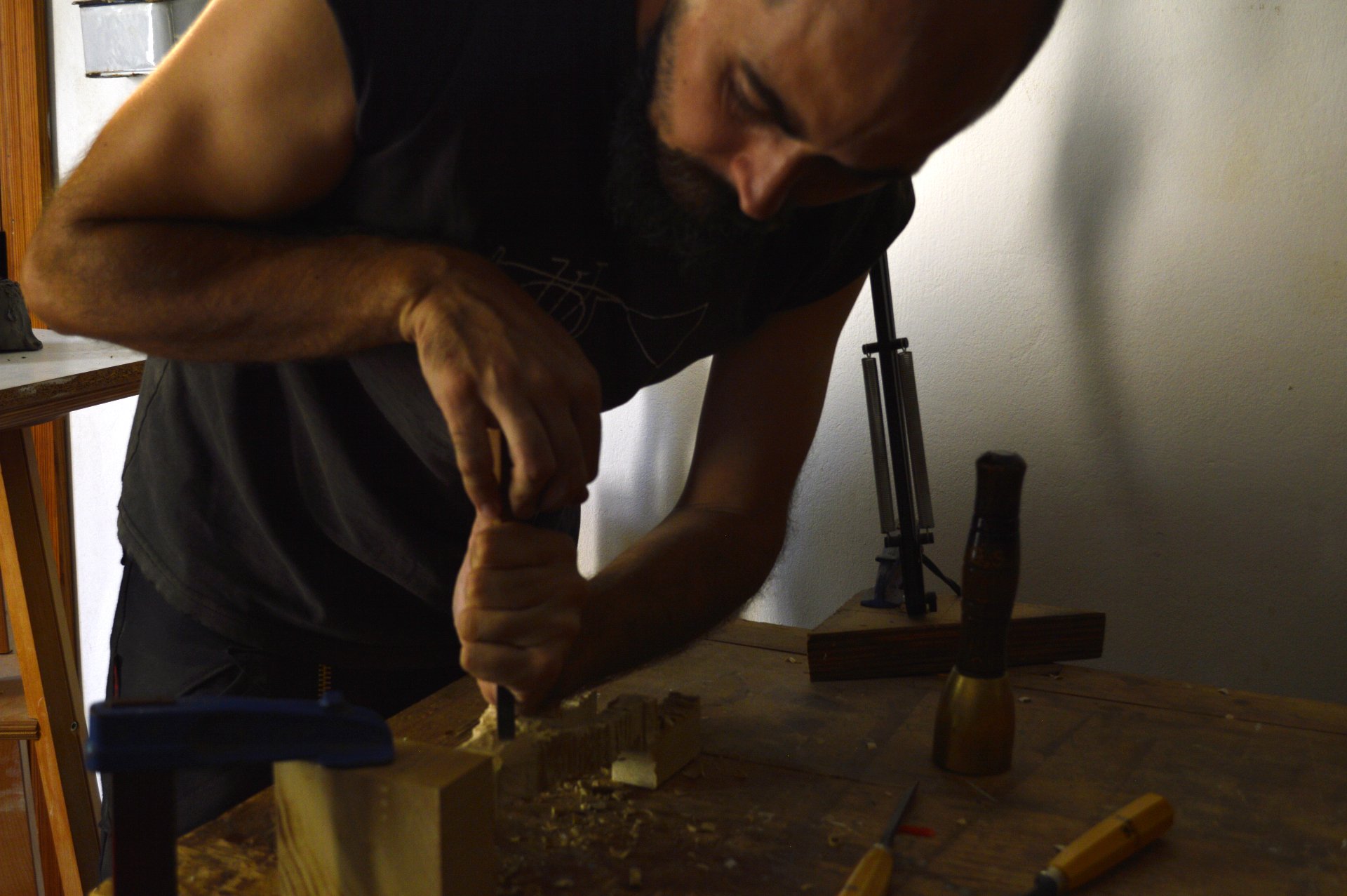
Guillem Salas (Barcelona, 1985) is a Spanish sculptor working primarily through direct wood carving. He began training as a woodcarver during childhood in his family workshop, later studying Conservation and Restoration of Cultural Heritage, specializing in sculpture, and Fine Arts at the Complutense University of Madrid.
His practice combines the technical knowledge of traditional carving with a contemporary investigation of the human figure and its relationship with space, objects and the structures that surround it. Working through parallel and interconnected bodies of work, Salas approaches sculpture as a field of inquiry rather than a means of providing fixed answers. He currently lives and works in Segovia, Spain.
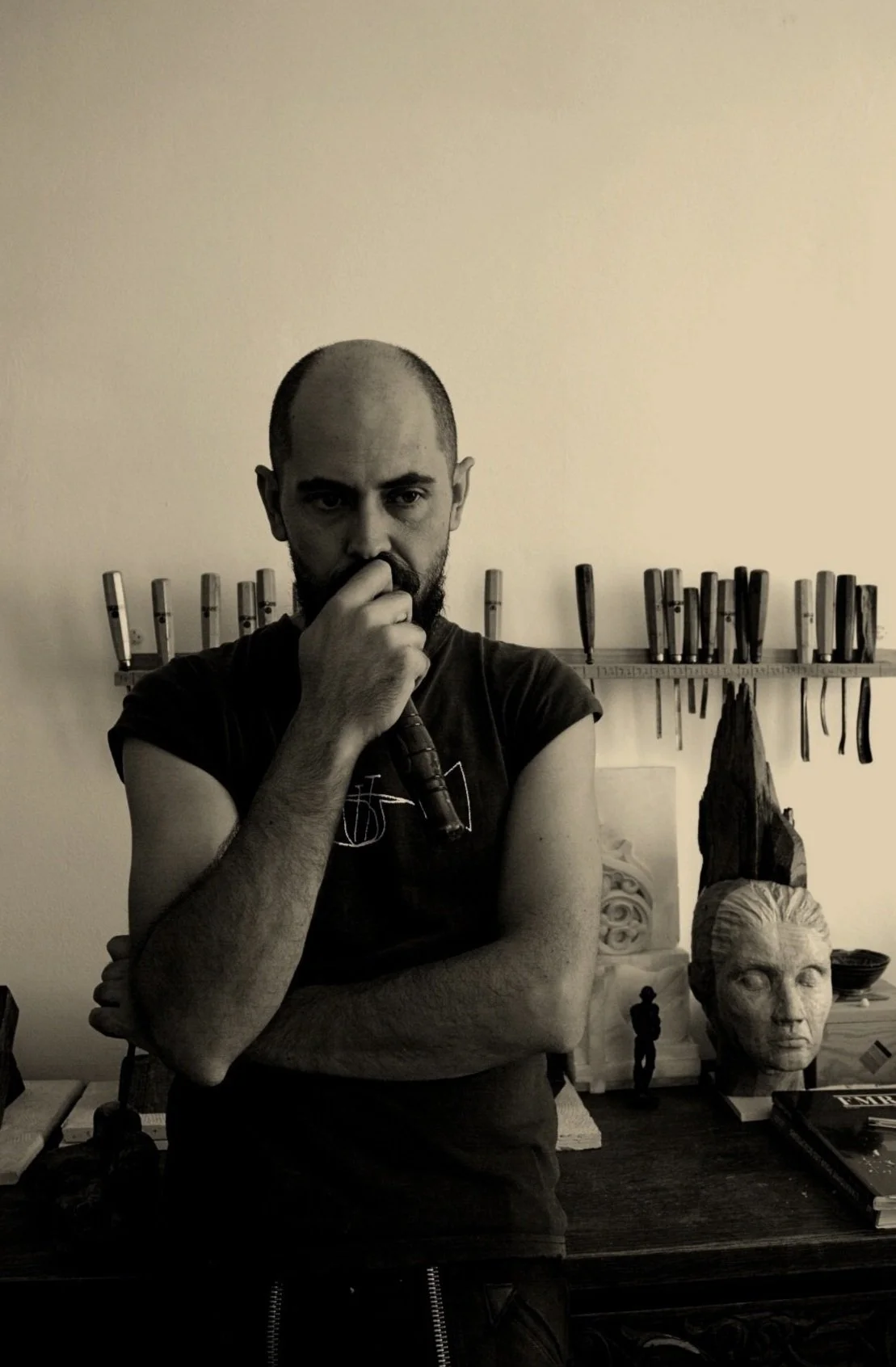
ARTIST STATEMENT
My practice begins with the human figure and with direct carving as a way of thinking through matter. Wood is not simply a medium: its resistance, grain, fractures and imperfections participate in the construction of each work.
I am interested in the relationship between the body and the structures that surround it. A pedestal, a wall, a sphere or another material can support, protect or contain a figure, but can also restrict it, separate it or determine its position. The support therefore ceases to be neutral and becomes part of the sculpture itself.
Through parallel bodies of work, I explore vulnerability, autonomy, belonging and displacement without seeking to resolve them into fixed meanings. These investigations often intersect and transform one another over time.
I understand sculpture as a space in which material, body and context remain in tension. Rather than providing answers, I am interested in creating situations that allow the viewer to complete the work through their own experience.
A PERSONAL NOTE
Nací en Barcelona en agosto de 1985. Me criaron mis padres, mis abuelos y mis tíos.
Mi padre era escultor y pintor, y junto a mi tío me inició en el arte. Pasaba horas observando y jugando en el taller: barro, madera, óleos, una caja de galletas de mantequilla danesas llena de frutos secos y un botijo con agua fresca. Fotos de Camarón, libros de Picasso y, siempre, el sonido del mazo: rítmico, profundo, un latido casi primitivo.
Aquel lugar acabó trasladándose a las orillas del Matarraña. Allí tuve mi primer contacto con la talla, a los ocho años. Recuerdo especialmente la confianza de tener entre las manos una herramienta de verdad: una herramienta que corta, que vacía la madera y hace entrar la luz; que dibuja sombras a medida que la gubia avanza, la mano guía y el mazo golpea.
Después, de pronto, nada.
Primero murió mi madre y poco después mi padre. Tenía once años. La orfandad no fue solo de parentesco, sino también de tutela: todo un camino por delante y nadie apartando las zarzas para dejarme pasar.
Pasaron la adolescencia y la juventud. Estudié arte, aunque la enseñanza académica tenía poco que ver con la que había recibido de mi padre. Echaba de menos el diálogo, el oficio y aquella transmisión directa entre dos personas que trabajan juntas.
Me fui a Madrid. Trabajé en call centers, aseguradoras y bares. Cociné y abrí dos restaurantes. Y no solo los abrí: los construí con mis propias manos junto a los hermanos que me dio Madrid.
Así volvieron las herramientas. Volvió la madera.
También llegaron una compañera, una perra y dos hijas.
A los treinta y cuatro años —la misma edad que tenía mi padre cuando murió— decidí regresar a aquello que, de alguna manera, siempre había estado allí.
La escultura.
Me fui a Mallorca. El Mediterráneo empezó a traerme madera de deriva. Después llegó la pandemia y, con ella, tiempo.
Y todo lo que llevaba años plantado empezó a germinar.